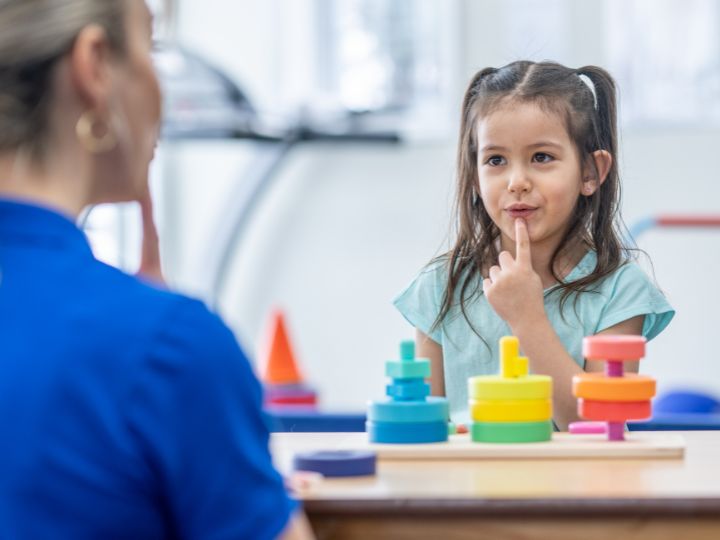
Early childhood is a crucial time for learning how to communicate. From babbling as babies to forming full sentences as preschoolers, children develop the foundation of speech and language skills that will shape their ability to express themselves, interact with others, and succeed in school.
While every child develops at their own pace, recognizing potential speech and language delays early can make a big difference in providing support and interventions that help children thrive.
In this article, we’ll explore the most common speech and language delays in early childhood, signs parents should watch for, and ways to support children’s communication development.
Understanding Speech and Language Development
Before diving into common delays, it’s important to understand the difference between speech and language:
- Speech refers to the physical act of producing sounds and words. It involves articulation, voice, and fluency.
- Language refers to understanding and using words to communicate meaning, including vocabulary, sentence structure, and social communication skills.
Typical milestones can vary, but most children develop certain abilities at roughly these ages:
- 12 months: Begin babbling and say their first words.
- 18–24 months: Vocabulary expands rapidly, often forming two-word phrases.
- 3–4 years: Use longer sentences, tell simple stories, and follow multi-step instructions.
Delays in either speech or language can range from mild difficulties to more significant challenges, and identifying them early helps children get the support they need.
Common Speech Delays
1. Articulation Disorders
Articulation disorders occur when a child has difficulty producing specific sounds correctly. For example, a child might say “wabbit” instead of “rabbit” or “thun” instead of “sun.” These challenges can make communication frustrating and may affect confidence in speaking.
2. Childhood Apraxia of Speech
Apraxia is a motor planning disorder, meaning the brain struggles to send the correct signals to the muscles used for speech. Children with apraxia may know what they want to say but struggle to produce consistent sounds or words. Signs include inconsistent pronunciation and difficulty imitating speech.
3. Stuttering
Stuttering involves repetitions, prolongations, or blocks in speech. While some children experience normal disfluencies as they develop language, persistent stuttering that continues beyond preschool years may require evaluation by a speech-language pathologist (SLP). Early support can reduce anxiety and improve fluency.
Common Language Delays
1. Expressive Language Delay
Expressive language delay occurs when children have difficulty expressing their thoughts and ideas. They may have limited vocabulary, struggle to form sentences, or have trouble asking for what they need. This delay can lead to frustration and behavioral challenges if children are unable to communicate effectively.
2. Receptive Language Delay
Receptive language delay affects a child’s ability to understand words, sentences, and instructions. Children may struggle to follow simple directions, answer questions, or grasp concepts like colors, numbers, or shapes. Receptive delays can affect learning, social interactions, and academic readiness.
3. Social Communication Difficulties (Pragmatic Language Delay)
Pragmatic language involves using language appropriately in social situations. Children with social communication difficulties may have trouble taking turns in conversation, understanding jokes or sarcasm, or adjusting language based on the listener. These challenges often overlap with conditions like autism spectrum disorder (ASD).
Signs Parents Should Watch For
Early detection is key. Parents can monitor for potential delays by observing their child’s communication skills. Some red flags include:
- Not babbling by 12 months
- Limited or no words by 18 months
- Difficulty combining words into two-word phrases by age 2
- Trouble understanding simple instructions
- Frustration or frequent tantrums when trying to communicate
If you notice these signs, it’s a good idea to consult a speech-language pathologist. Early intervention can help children catch up and develop strong communication skills.
Supporting Speech and Language Development at Home
While professional evaluation is crucial, parents can also support their child’s language growth at home:
- Read aloud daily: Encourage children to listen, ask questions, and talk about the story.
- Narrate routines: Describe what you and your child are doing throughout the day to build vocabulary.
- Encourage conversation: Give your child time to respond and practice turn-taking in dialogue.
- Model clear speech: Repeat words and phrases correctly to reinforce proper pronunciation.
- Play interactive games: Songs, rhymes, and games like “Simon Says” help develop listening and expressive skills.
Consistent engagement and a language-rich environment can significantly improve speech and language outcomes.
When to Seek Professional Help
A speech therapist from Heartwise Support can assess your child’s speech and language skills, identify delays, and create a personalized intervention plan. Early support often leads to faster improvement and prevents frustration or social challenges from affecting long-term development.
Remember, while some variations in speech and language development are normal, persistent delays should always be taken seriously. Early intervention is not just helpful. It can be life-changing.
Conclusion
Speech and language delays are common in early childhood, but recognizing them early makes a huge difference. With early intervention and consistent practice, children can develop the skills they need to express themselves confidently and thrive in everyday life.
Heartwise Support is here to support your child’s communication journey. Schedule a consultation and take the first step toward helping your child reach their full potential.
Share the article